

Sustainability in Food Production: Environmentally Friendly Practices
- Reem Mourad
- 2 days ago
- 19 min read
In the past few years, there has been extensive demand for improving food systems in order to address the challenging issues associated with feeding and expanding the global population while minimizing impacts on the environment (Brock et al., 2023).
The food system is made up of every stage and their linked value-adding activities relate to the production of food (Figure 1). These stages include collection, processing, distribution, consumption, and disposal of products obtained from agriculture, forestry, or fisheries, along with the broader social, economic, and environmental contexts in which they occur. The food system also consists of sub-systems involving agriculture, management of waste, and supply of resources, and interacts with other essential systems such as energy, trade, and health (FAO, n.d.).
Sustainable Food System Definition and the Current Circumstances
Sustainable development is defined as fulfilling the requirements of the present without sacrificing the capacity of future generations to fulfil their own needs (Baldwin, 2009). In this context, a sustainable food system ensures universal access to food security and adequate nutrition while maintaining the economic, social, and environmental systems that support long-term food availability and well-being. Given that food systems affect all individuals globally, promoting the sustainable development of the food supply chain is critical for ensuring future stability and resilience. A sustainable food system is fundamental to the United Nations' Sustainable Development Goals (SDGs). SDGs goals include achieving significant changes in agriculture and food systems in order to eliminate hunger, establish food security, and enhance nutrition. These developments necessitate the transformation of the food system into a system that is more stable, sustainable, productive, inclusive of impoverished and economically disadvantaged groups, and capable of ensuring adequate nourishment for all to attain the Sustainable Development Goals (FAO, n.d.).
The contemporary food supply chain is widely considered unsustainable due to excessive reliance on resources for food production, including large-scale animal farming and off-season crop cultivation. In addition, the accelerated population growth is leading to the conversion of agricultural land for food production, posing a significant danger to biodiversity (Awuchi et al., 2020).
Agricultural and food systems represent a main source of environmental pressure worldwide, contributing an estimated 17–32% of global greenhouse gas emissions while also demanding substantial energy and water resources (Francis & Justin, 2009). In the United States alone, the food system accounts for more than 16% of total energy consumption. In general, food processing is responsible for approximately 50–80% of water use in industrialized countries (Francis & Justin, 2009). Despite this intensive use of natural resources, malnutrition continues to persist globally, highlighting significant inefficiencies and inequalities within current food systems. Consequently, key sustainability factors within the food supply chain include energy, waste, water, air, climate, biodiversity, food quality, quantity, pricing, safety, employment, and employee well-being (Francis & Justin, 2009).

Figure 1: Components of the supply chain.
Strategies have been developed for reducing the negative environmental impacts of agriculture and food production, such as the incorporation of highly nutritious crops with low environmental impact (Awuchi et al., 2020). Because present food systems heavily contribute to natural resource exhaustion, greenhouse gas emissions, and food waste, food producers and manufacturers are required to incorporate sustainable practices to minimize these effects and ensure the food system's long-term stability. Such practices include adopting the concepts of the circular economy, reducing food waste, encouraging plant-based diets, and processing with minimal water and energy consumption (Baldwin, 2009; Prasanna et al., 2024). Transforming consumer behaviour toward sustainable and nutritionally balanced diets is equally essential, as dietary choices directly influence production patterns, resource use, and the overall environmental footprint of the food system, ultimately supporting long-term food security and environmental sustainability.
Meanwhile, the food industry continues to face ongoing difficulties in achieving sustainability, as global climate change has been identified as an important obstacle impacting this objective. The rapid industrialization has resulted in rising greenhouse gas concentrations, contributing to elevated global temperatures, notable alterations in climate patterns, and the repeated incidence of extreme weather events. Climate hazards, like elevated temperatures, droughts, and floods, can directly impact agricultural output, resulting in diminished food production and price fluctuations (Cai, 2025) in addition to resource limitation, food security challenges, and health concerns.
Despite these issues, the food industry is achieving significant advancements in sustainability, reducing greenhouse gas emissions, enhancing supply chain transparency, and promoting ethical sourcing (Prasanna et al., 2024). Applying sustainable food production practices will result in reducing production costs, enhancing product functionality and quality, increasing sales, enhancing environmental performance, strengthening stakeholder relationships, and minimizing risks (Baldwin, 2009).
Role of Food Product Development in Sustainability
Sustainability in the food sector is strongly influenced by product development processes. Approximately 80% of the economic costs and product's environmental impact are associated with the design phase (Garcia et al., 2021). This presents significant potential to lower environmental and financial expenses by continuously evaluating items prior to their production instead of utilizing a reactive strategy to mitigate the effects of an established product. This, in turn, would enhance the sustainability performance of the product in both the short and long terms.
Sustainability is explained via the triple bottom line concept, which contains three interconnected dimensions: environmental protection, economic viability, and social responsibility. By integrating these dimensions into product development, such methodologies enable the assessment of environmental impacts across the entire product life cycle from the early stages of the new product development (NPD) process, thereby supporting the creation of products with reduced environmental impact (Garcia et al., 2021).
Sustainability advancements in the food sector include using eco-friendly and organic ingredients, adopting farming methods that reduce chemical use and protect biodiversity, implementing recyclable and biodegradable packaging, utilizing renewable energy in production with zero-waste objectives, promoting local logistics, and supporting fair trade labour. Social elements are also fundamental as they influence consumer behavior. For instance, awareness has been growing amongst consumers of the connection that dietary habits have with health. Therefore, demand for healthier food is increasing. Figure 2 demonstrates some environmental, economic, and social issues that could be impacted by the NPD process in the food industry. These issues should be evaluated throughout the product’s life span, from raw material sourcing to final disposal, before large-scale production. From an environmental perspective, it is important to assess potential negative impacts such as land use, solid waste generation, and other ecological effects. Economic considerations include estimating the product’s expected price and related financial factors, while social aspects involve ensuring accessibility and availability to consumers.

Figure 2: Sustainability elements that need to be considered during the product development phase (Garcia et al., 2021).
Monitoring and assessing sustainable performance throughout the various stages of production is crucial to recognizing early effects on the environment, economy, and society to ensure continued advancement. In addition, all employees should receive training and be made aware of their part in enhancing the sustainability performance of the whole food company. These actions will enable food businesses to produce environmentally sustainable food products without sacrificing their financial performance, quality, or safety (Garcia et al., 2021).
Emerging Technologies in Food Production
Food processing has conventionally depended on thermal techniques like pasteurization, sterilization, and canning to provide microbiological safety and prolong shelf life. Emerging technologies aim to provide non-thermal techniques that extend the shelf life of perishable foods, protect the bioavailability of food elements, and maintain their functional and technological qualities. Emerging technologies involve:
High-Pressure Processing (HPP): depends on destroying the viruses and microbes’ cell membranes or changing the hydrophilic properties of their proteins, leading to deactivating them and degrading their enzymes without the need for heat. HPP also increases the permeability of plant tissue, which allows food ingredients to dissolve more quickly without changing the dish's colour, flavour, or texture (Ugoala, 2025).
Ultrasound techniques: Applying ultrasounds in high-intensity mode for drying food such as coffee, fruit, and vegetables, enhances the quality of the final product and maintains antioxidants, vitamin C, and other nutritional elements (Ugoala, 2025).
Radio-frequency: The low-energy, economical radio-frequency drying method evaporates water at temperatures below 80°C with homogeneous heating (Ugoala, 2025).
Pulsed electric field (PEF): This technique for microbial inactivation weakens the texture and destroys the structural stability of cell walls. It is highly recommended for the extraction of beneficial substances from many vegetables and fruits (Ugoala, 2025).
High-voltage electric discharge (HVED): A non-thermal technique appropriate for industries that avoid high temperatures. There are many uses for HVED, especially in the extraction of different bioactive substances (Jokic et al., 2019).
Ohmic heating: Ohmic heating is a form of electrically resistant heating utilized for the thermal processing of food products. When electric current flows through food, it heats up due to its own electrical resistance. Ohmic heating is employed in several applications for liquids and pumpable particles, including pasteurization, sterilization, preheating, and blanching (Patel & Singh, 2018).
Cold plasma: Plasma is a type of ionized gas produced by a neutral gas. Plasma contains equal charges of ions and electrons and can eliminate microbial cells, spores, and viruses. Plasma can be generated in four different modes, using different techniques. The cold plasma approach is excellent in sterilizing contaminants found in cereal grains, meat products, milk, fruits, and vegetables (Chaitradeepa et al., 2023).
The basis of these emerging technologies is the internal creation of energy through heat transmission. This minimizes waste and energy utilization, enhances the quality and digestibility of processed meals, and optimizes heat and mass transfer processes. They also limit Maillard reactions, enhance energetic production and product quality, and shorten heating times (Ugoala, 2025). Emerging food processing technologies have become increasingly relevant as substitutes for traditional thermal processes, prompted by consumer demand for safer, fresher, and more nutritious foods. Conventional heat-based methods often affect nutrient preservation and sensory attributes, while innovative non-thermal and mixed methods maintain bioactive substances and ensure microbiological safety (Aslam et al., 2025).
Sustainable Packaging Utilization
Plastic packaging has become more popular amongst manufacturers in recent years. These bags are manufactured from crude oil byproducts. Although they can be recycled in a variety of ways, natural resources are beginning to diminish due to the growing usage of crude oil. Plastics are non-biodegradable and take centuries to degrade, resulting in adverse environmental effects. Furthermore, improper disposal of plastic containers can lead to water contamination, harming sea life, compromising water security for humans and animals, and negatively impacting the earth's ecology. Generally, plastic contamination represents a serious risk to the marine environment.
Organic paper bags loaded with plantable seeds are a potential development for environmentally friendly packaging. These bags serve a dual function: they facilitate the transportation of products while simultaneously contributing to environmental conservation by encouraging environmentally responsible practices, such as recycling and planting. This benefits the ecosystem and encourages biodiversity, which is in line with international initiatives to cut down on plastic waste and create a greener world. The use of plantable seed paper bags is a practical step towards a more sustainable future as customer demand for eco-friendly products keeps growing (Sheeri & Mendon, 2025).

Figure 3: Biopolymer Packaging Materials Life Cycle (Chen et al., 2019).
Biopolymers packaging is also a sustainable solution that is produced from plant-based sources, like starch and cellulose. They are biodegradable and derived from renewable resources. They originate from natural sources and ultimately integrate again into the environment. The biopolymers we use in our daily lives can create a continuous cycle, with one cycle ending and moving on to the next, as seen in Figure 3 (Chen et al., 2019).
The advantages of biodegradable packaging encompass ease of disposal, absence of dangerous pollutants, reduction of carbon impact, and decreased transportation costs. For instance, polylactic acid (PLA) is a biopolymer packaging derived from the fermentation of plant starches such as corn, cassava, and sugarcane. It can be utilized as a food packaging material for products with limited shelf life, such as fruit and vegetables (Evyan et al., 2022).
Starch-based packaging material sustains the shelf life by protecting food items from gases and volatile compounds, and regulates water permeability. Nonetheless, mechanical properties and moisture susceptibility are two difficulties that restrict their application and require further research and development. Consequently, numerous blending and combining procedures have been established, including polymer blending and strengthening using particulate or fibrous fillers (Chen et al., 2021).
In addition, protein was also utilized for creating polymers, as the mechanical qualities achieved are better in comparison with polysaccharide and lipid films.
Corn zein, wheat gluten, whey, egg white, collagen, gelatin, and fish proteins are among the proteins that have been used as possible bases for film-forming. While most feature appropriate characteristics and the capacity to limit oxygen absorption, they exhibit undesirable effectiveness when preserving the packaged product due to their hydrophilic qualities. To improve the functionality of protein-based films, various raw materials are combined, incorporating strengtheners and applying chemical and enzymatic methods for polymer chain modification, as well as physical techniques such as cold plasma and ultraviolet radiation, which modify the characteristics of the polymeric network (Martines et al., 2021).
Sustainable Meat Alternative
Animal proteins have served as traditional protein sources in the food industry for many years and are utilized in the development and manufacture of a wide range of food products. This is primarily due to their functional characteristics, which consist of emulsification, foaming, gelation, solubility, and water retention and binding. However, the production and processing of animal-based protein have environmental consequences, including land and water demands, pollution, and greenhouse gas emissions associated with livestock farming (Munialo et al., 2025).
Food production contributes 20-25% of worldwide greenhouse gas emissions, mostly attributed to animal agriculture. Moreover, the global population is estimated to approach 9 to 10 billion individuals by 2050, with the need for meat expected to reach 455 million tons and the overall food consumption to increase by 98% (Zor et al., 2024). The primary problem for global food security is fulfilling the demand for protein in a manner that is both healthful and environmentally sustainable (Zor et al., 2024).
In livestock production, 81.7% of protein is wasted throughout the transformation of feed and grass protein into meat protein (Zor et al., 2024). Livestock farming generates greater pollutants, land and water use, greenhouse gas emissions, and biodiversity degradation compared to plant-based food production. Moreover, the production of one unit of plant-based protein necessitates approximately one-twentieth of the land resources required for a comparable quantity of conventional meat protein. Consequently, there has been an increasing shift toward alternative protein sources that fulfill human nutritional requirements and enhance animal welfare without worsening the carbon footprint. In recent years, plant-based meat substitutes and cell-based meat have been proposed to satisfy consumer needs and drive the direction of food in the future (Zor et al., 2024).
Meat substitutes that aim to imitate the flavor and texture of red meat are promoted for their advantages over red meat in terms of the environment and human health. Plant-based meat alternative products are versatile and have different ingredients. They formulated by combining a plant protein (such as soy, pea, potato, rice, wheat, and/or mycoprotein), fats (canola, coconut, soybean, and/or sunflower oil), and other innovative ingredients(soy leghemoglobin, red-colored vegetable extracts, and/orflavoring agents) to mimic the sensorial attributes and macronutrient composition of meat (Figure 4) (Van et al., 2020).

Figure 4: A Comparison of the nutritional content for ground beef and innovative plant-based meat analogues (Van et al., 2020).
With several alternatives to animal meat being investigated, edible insects are progressively regarded as one of the most sustainable solutions. Edible insect proteins have comparable functioning and sensory attributes to meat proteins and can be utilized in the formulation of ready-to-eat food like sausages, hot dogs, and chicken nuggets. In addition to its favorable amino acid profile, the lipid composition of edible insects primarily comprises unsaturated fatty acids rather than saturated ones. Insect-derived meat contains a greater protein concentration per gram than animal sources: 63% in cricket powder compared to 25.6% in beef, 26.3% in milk powder, and 39% in chicken (Anyasi et al., 2025).
Among alternative protein technologies, cultured meat has the possibility to generate "real" meat with fewer consequences than traditional livestock rearing (Ding et al, 2021).
Cultured meat, also sometimes referred to as cultivated meat or lab-grown clean meat, is produced by cell engineering techniques. The process involves obtaining muscle cells from an animal and cultivating them into muscle tissues in culture conditions in a laboratory (Pushparaja et al., 2023). Several cultured products offer various benefits, such as being more ethical and sustainable, having better nutrition, being more convenient, and eventually being even more reasonably priced (Goswami et al., 2023). A further benefit of cultured meat is that its manufacturing period is shorter than that of conventional meat production (Figure 5).
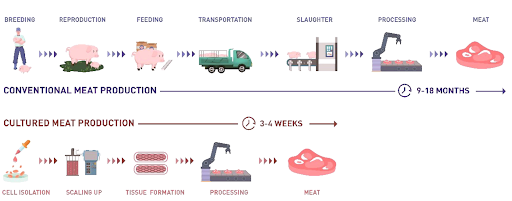
Figure 5: A comparison of the manufacturing durations of cultured meat and regular meat (Ding et al, 2021).
Cultured meat is a promising alternative protein technology that aims to produce healthier, safer, and more sustainable meat. It is muscle and fat tissue generated in vitro by the culturing and biomanufacturing of animal cells for human consumption. However, producing cultured meat on a large scale while maintaining its low cost is still a difficult task. Technology, regulation, and consumer acceptance are all challenges for cultured meat production (Goswami et al., 2023).
Food Waste Management
Food waste (FW) is a major worldwide issue that affects all stages of the food supply chain, from initial manufacturing to final consumer consumption. Approximately 3.1 billion people globally have limited accessibility to a healthy diet. In the meantime, it is estimated that 14% of the world's food supply is wasted after harvest and before it reaches retail outlets, costing $400 billion annually (Mia et al., 2025). Additionally, 17% of the food supply is wasted by customers, especially in homes and retail establishments. According to estimates, FW accounts for almost 33% of global food production annually, which could feed 1.26 billion undernourished people. Growing food consumption, driven by worldwide population expansion, contributes to substantial food and agricultural waste (Mia et al., 2025).
The economic and environmental implications of food waste are extensive, as it leads to the loss of valuable resources and inefficient use of labor, infrastructure, and energy. Food waste contributes significantly to greenhouse gas emissions, which have a significant impact on climate change. Methane, a potent greenhouse gas that absorbs atmospheric heat more effectively than carbon dioxide, is emitted during the anaerobic breakdown of organic waste in composting facilities.
Food waste comprises substantial substances, including polyphenols, dietary fibers, and proteins, which can be extracted and used in functional food systems. For instance, shrimp and crab shells are rich in Omega-3 fatty acids, and olive oil mill by-products have plenty of Polyunsaturated fatty acids (Mia et al., 2025).
Numerous strategies are available to help reduce the potentially adverse environmental impacts of food or agro-industrial by-products, such as oil extraction and the production of bioactive compounds, vinegar, edible coatings, cosmetics, animal feed, biogas, and organic fertilizers (Rashwan et al., 2023).

Figure 6: Effective use examples of food and agricultural residues. (Rashwan et al., 2023).
An additional instance of food recycling involves the extraction of anthocyanins from black rice bran, a by-product produced during the processing of black rice, as anthocyanins are known to offer protection against oxidative damage and possess antidiabetic properties. The procedure utilizes an environmentally sustainable methodology and solvent, yielding an extract with biological viability (Seguí & Barrera, 2025). In terms of oil production, conventional methods typically involve numerous chemical processes that not only contaminate the environment but also exhibit inefficient use of resources. On the other hand, the appropriate utilization of edible plant by-products can diminish waste in the production process while enhancing both the effectiveness and the quality of oil production. Fermentation by microbes can convert the by-products of dietary plants into oils and lipids.
A similarly novel approach is supercritical fluid technology, which can extract oils and fats from edible plant by-products at high pressure and high temperature, which is more environmentally friendly and efficient than mechanical pressing or solvent extraction. Olive pomace, coconut shells, and grape seeds are also commonly used in oil production. Coconut oil can be produced from coconut shells through mechanical pressing. Mechanical pressing and supercritical methods of extraction can be applied for obtaining edible oils from grape seeds, which are abundant in oleic acid and antioxidants that promote health and protect against cardiovascular disease (Rashwan et al., 2023).
3D Food Printing and Sustainability
3D food printing (3DFP) is an emerging technology that can be effectively employed to address food waste from many sources. 3DFP can assist in recycling specific waste kinds to create specific and visually appealing types that are familiar in flavor and form. 3DFP incorporates digital gastronomy, realized through the layer-by-layer construction of attractive designs (Wong et al., 2022). 3D printing technology was first used for the manufacturing of chocolate and confections due to its appealing design (Figures 7 and 8). This technology is progressing towards the production of specialized foods with personalized nutritional and textural attributes that cater to the needs of children, athletes, or patients with swallowing problems. 3D printing technology possesses significant possibilities for the recycling of waste from fruits, vegetables, meats, or seafood through incorporating these as a puree or paste. Various food ingredients can be incorporated and printed in different layers to produce a nutritionally functional food (Çakmak & Gümüş, 2020). Despite its significant potential for further advancement, the food safety and sustainability concerns associated with 3D printing technology have not been well investigated. Furthermore, the standards and regulations associated with 3D printed functional food have yet to be determined (Çakmak & Gümüş, 2020).

Figure 7: 3D Food Printer. (Çakmak & Gümüş, 2020)

Figure 8: Illustration of corn-based snack printing. (Çakmak & Gümüş, 2020)
Conclusion
Food production is a crucial element in sustainability that needs to be considered in order to achieve the global end goal. Producers, shareholders, and consumers are all contributors to sustainability; therefore, more effort to raise awareness and promote the incorporation of more responsible practices is necessary throughout the food system. Producers play a crucial role in establishing a sustainable food production system, minimizing waste, and optimizing resource utilization. Stakeholders can facilitate transformation by preferring companies that implement environmentally friendly practices. Consumers are influenced by their buying habits and increasing interest in items that comply with environmental and health standards.
Before a product appears on shelves, sustainability considerations must be taken into account and examined during the product development phase, including a combination of social, economic, and environmental factors—the triple bottom line of sustainability. Using innovative methods instead of traditional thermal heating can save energy consumption without sacrificing the final product's quality or safety. Organic paper bags loaded with plantable seeds, and biopolymers packaging are a viable alternative to plastic bags. Plant-based meat, edible insect proteins, and cultured meat are more ethical, sustainable, and environmentally friendly alternatives to traditional meat. Reducing food waste is another crucial step in the direction of sustainability. Food waste is rich in nutritional components, such as polyphenols, dietary fibers, and proteins, and can be utilized in food production systems. 3DFP can facilitate the recycling of particular waste types to produce distinct and aesthetically pleasing forms that are recognizable in taste and shape.
The current global food system is challenged with serious issues that make it unsustainable and dangerous to the environment. These issues have adverse impacts on the ecosystem in addition to jeopardizing food security. Agrifood systems have been improved and brought into line with the environment, but new challenges have highlighted their weaknesses, especially in lower-income societies. These challenges include climate change impacts, resource overuse, high emissions, inefficient production and consumption patterns, and large amounts of food waste (Sousa et al., 2024).
Bibliographical references
Anyasi, T. A., Acharya, P., & Udenigwe, C. C. (2025). Edible insects as an alternative protein source: Nutritional composition and global consumption patterns. Future Foods, 12, 1-15. https://doi.org/10.1016/j.fufo.2025.100699
Aslam, M. U., Aslam, E., & Shahbaz, M. (2025). Emerging Technologies In Food Processing — A Narrative Review. Journal of Health and Rehabilitation, 3(4), 786–793. https://doi.org/10.71000/8ksb5n90
Awuchi, C., Awuchi, C., Ukpe, A., Asoegwu, C., Uyo, C., & Ngoka, K. (2020). Environmental Impacts of Food and Agricultural Production: A Systematic Review. European Academic Research, 8, 1120–1135.
Brock, S. (2023). What is a food system? Exploring multiple enactments of the food system. Agriculture and Human Values, 40(3), 1–15. https://doi.org/10.1007/s10460-023-10457-z
Çakmak, H., & Gümüş, C. E. (2020). 3D Food Printing With Improved Functional Properties: A Review. International Journal of 3D Printing Technologies and Digital Industry, 4(2), 178–192. https://doi.org/10.46519/ij3dptdi.746389
Cai, Y. (2025). How does climate change affect regional sustainable development? Empirical evidence from 186 countries around the world. International Review of Economics & Finance, 99, 104047. https://doi.org/10.1016/j.iref.2025.104047
Caron, P., Ferrero y de Loma-Osorio, G., Nabarro, D., Hainzelin, E., Guillou, M., Andersen, I., Arnold, T., Astralaga, M., Beukeboom, M., Bickersteth, S., Bwalya, M., Caballero, P., Campbell, B. M., Divine, N., Fan, S., Frick, M., Friis, A., Gallagher, M., Halkin, J.-P., & Verburg, G. (2018). Food Systems For Sustainable Development: Proposals For A Profound Four-Part Transformation. Agronomy for Sustainable Development, 38(41), 1-12. https://doi.org/10.1007/s13593-018-0519-1
Chaitradeepa, G. M., Lokesh, A., Hanumantharaju, K. N., & Chennappa, S., G. (2023). Cold Plasma Technology and Its Applications in Food Industry. 23(1). https://doi.org/10.51470/bca.2023.23.S1.0000
Chen, H., Wang, J., Cheng, Y., Wang, C., Liu, H., Bian, H., Pan, Y., Sun, J., & Han, W. (2019). Application of Protein-Based Films and Coatings for Food Packaging: A Review. Polymers, 11(12), 1-32. https://doi.org/10.3390/polym11122039
Chen, Y., Lu, K., Liu, H., & Yu, L. (2021). Starch-Based Packaging. In S.M. Sapuan, and R.A. Ilyas, (Eds.), Material, Environmental and Economic Aspects (pp. 1-26). John Wiley & Sons Ltd.
Ding, S., Post, M. J., & Zhou, G. (2021). Perspectives on cultured meat. Food Materials Research, 1(3), 1-5. https://www.maxapress.com/article/doi/10.48130/FMR-2021-0003
Evyan Yang C.Y, Liew, Patricia Jacob, & M Y Chong. (2022). Biodegradable food packaging and film: A short review. Food Research, 6(1), 1-12. https://doi.org/10.26656/fr.2017.6(S1).007
Francis, C., & Justin, V. W. (2009). Agriculture. In C.J. Baldwin, (Ed.), Sustainability in the Food Industry (pp. 1–28). A John Wiley & Sons, Ltd.
Garcia-Garcia, G., Azanedo, L., & Rahimifard, S. (2021). Embedding sustainability analysis in new food product development. Trends in Food Science & Technology, 108, 236–244. https://doi.org/10.1016/j.tifs.2020.12.018
Goswami, A. B., Charlesworth, J., Biazik, J. M., Rybchyn, M. S., & Coutre, J. le. (2023). Cultured meat technology: An overview. In Post, M., Connon, C. & Bryant, C. (Eds.), Advances in cultured meat technology (pp. 3–26). Burleigh Dodds Science Publishing. https://doi.org/10.19103/AS.2023.0130.01
Jokic, S., Pavlović, N., Jozinović, A., Ackar, D., Babic, J., & Šubarić, D. (2019). High-Voltage Electric Discharge Extraction of Bioactive Compounds from the Cocoa Bean Shell. Chemical and Biochemical Engineering, 33(2), 271–280. https://doi.org/10.15255/CABEQ.2018.1525
Lokesh, A. (2024). Cold Plasma Technology and Its Applications in Food Industry. 23(1). https://doi.org/10.51470/bca.2023.23.S1.0000
Martins, V. G., Romani, V. P., Martins, P. C., & Nogueira, D. (2021). Bio-based-Packaging. In S.M. Sapuan and R.A. Ilyas (Eds.), Material, Environmental and Economic Aspects (pp. 1-523). John Wiley & Sons Ltd. https://www.academia.edu/73364215/Bio_based_Packaging_Material_Environmental_and_Economic_Aspects
Mia, Md. S., Ahmed, Md. M., & Zzaman, W. (2025). Valorization of food waste into functional ingredients supports a sustainable strategy for the food industry. Discover Food, 5(275) 1-35. https://doi.org/10.1007/s44187-025-00584-3
Munialo, C. D., Baeghbali, V., & Acharya, P. (2025). Plant-Based Alternatives to Meat Products. Foods, 14(8), 1–24. https://doi.org/10.3390/foods14081396
Nguyen, H. (n.d.). Sustainable food systems: Concept and framework. FAO. https://openknowledge.fao.org/server/api/core/bitstreams/b620989c-407b-4caf-a152-f790f55fec71/content
Patel, A., & Singh, M. (2018). Ohmic Heating for Food Products- A Review. Current Journal of Applied Science and Technology, 27(3), 1–7. https://doi.org/10.9734/CJAST/2018/40664
Prasanna, S., Verma, P., & Bodh, S. (2024). The role of food industries in sustainability transition: A review. Environment Development and Sustainability, 27(7), 15113–15133. https://doi.org/10.1007/s10668-024-04642-1
Pushparaj, P., Sonae, Lakshmi, S., & Sanjeevi. (2023). Cultured Meat. Journal of Survey in Fisheries Sciences, 10(1), 3571–3579.
Rashwan, A. K., Bai, H., Osman, A. I., Eltohamy, K. M., Chen, Z., Younis, H. A., Alfatesh, A., Rooney, D., & Yap, P.S. (2025). Recycling food and agriculture by-products to mitigate climate change: A review. ResearchGate, 21(6), 3351–3375. https://doi.org/10.1007/s10311-023-01639-6
Seguí, L., & Barrera, C. (2025). Functional Ingredients from Food Waste and By-Products: Processing Technologies, Functional Characteristics and Value-Added Applications. Foods, 14(5), 1-5. https://doi.org/10.3390/foods14050847
Sheeri, S. N., & Mendon, S. (2025). Organic Paper Bags: With Plantable Paper Bags. ResearchGate, 6(2), 1118–1122. https://doi.org/10.54660/.IJMRGE.2025.6.2.1118-1122
Sousa, R. de, Bragança, L., Silva, M. V. da, & Oliveira, R. S. (2024). Challenges and Solutions for Sustainable Food Systems: The Potential of Home Hydroponics | MDPI. Sustainability, 16(2). https://www.mdpi.com/2071-1050/16/2/817#The_Environmental_Issue_of_Global_Food_Systems
Ugoala, E. (2025). Enhancing Sustainable Food Production Through Effective Food System Management | Request PDF. Trends in Biological Sciences, 1(2), 155–170. https://doi.org/10.21124/tbs.2025.155.170
Van Vliet, S., Kronberg, S. L., & Provenza, F. D. (2020). Plant-Based Meats, Human Health, and Climate Change. Frontiers in Sustainable Food Systems, 4, 1–17. https://doi.org/10.3389/fsufs.2020.00128
Wong, G., Pant, A., Zhang, Y., Chua, C., Hashimoto, M., Leo, C., & Tan, U.-X. (2022). 3D food printing– sustainability through food waste upcycling. Materials Today: Proceedings, 70. https://doi.org/10.1016/j.matpr.2022.08.565
Zor, M., Menevseoglu, A., & Ufuk, S. (2024). Plant-Based Meat: A Sustainable Alternative To Meat. Gıda, 49(3), 504–516. https://doi.org/10.15237/gida.GD23147
Visual references
Figure 1: [Photo of supply chain component] (n.d.), Freepik. https://www.freepik.com/free-vector/supply-chain-vector-concept_39921489.htm#from_element=cross_selling__vector
Figure 2: Garcia-Garcia, G., Azanedo, L., & Rahimifard, S. (2021). Embedding sustainability analysis in new food product development. Trends in Food Science & Technology, 108, 236–244. https://doi.org/10.1016/j.tifs.2020.12.018
Figure 3: Chen, H., Wang, J., Cheng, Y., Wang, C., Liu, H., Bian, H., Pan, Y., Sun, J., & Han, W. (2019). Application of Protein-Based Films and Coatings for Food Packaging: A Review. Polymers, 11(12), 2039. https://doi.org/10.3390/polym11122039 distributed under the terms of the Creative Commons Attribution 4.0 International License (http:// creativecommons.org/licenses/by/4.0/)
Figure 4: van Vliet, S., Kronberg, S. L., & Provenza, F. D. (2020). Plant-Based Meats, Human Health, and Climate Change. Frontiers in Sustainable Food Systems, 4, 1–17. https://doi.org/10.3389/fsufs.2020.00128
Figure 5: Goswami, A. B., Charlesworth, J., Biazik, J. M., Rybchyn, M. S., & Coutre, J. le. (2023). Cultured meat technology: An overview. In Advances in cultured meat technology (Post, M., Connon, C. and Bryant, C. (ed.), pp. 3–26). Burleigh Dodds Science Publishing. https://doi.org/10.19103/AS.2023.0130.01 distributed under the terms of the Creative Commons Attribution 4.0 International License (http:// creativecommons.org/licenses/by/4.0/)
Figure 6: Rashwan, A. K., Bai, H., Osman, A. I., Eltohamy, K. M., Chen, Z., Younis, H. A., Alfatesh, A., Rooney, D., & Yap, P.-S. (2025). (PDF) Recycling food and agriculture by-products to mitigate climate change: A review. ResearchGate, 21(6). https://doi.org/10.1007/s10311-023-01639-6
Figure 7 and 8 : Anonymous, “Natural Machines 3D printer and printed samples”. https://www.naturalmachines.com/press-kit


Comments